Preferred Mersey barrage route marks major step for tidal power plans
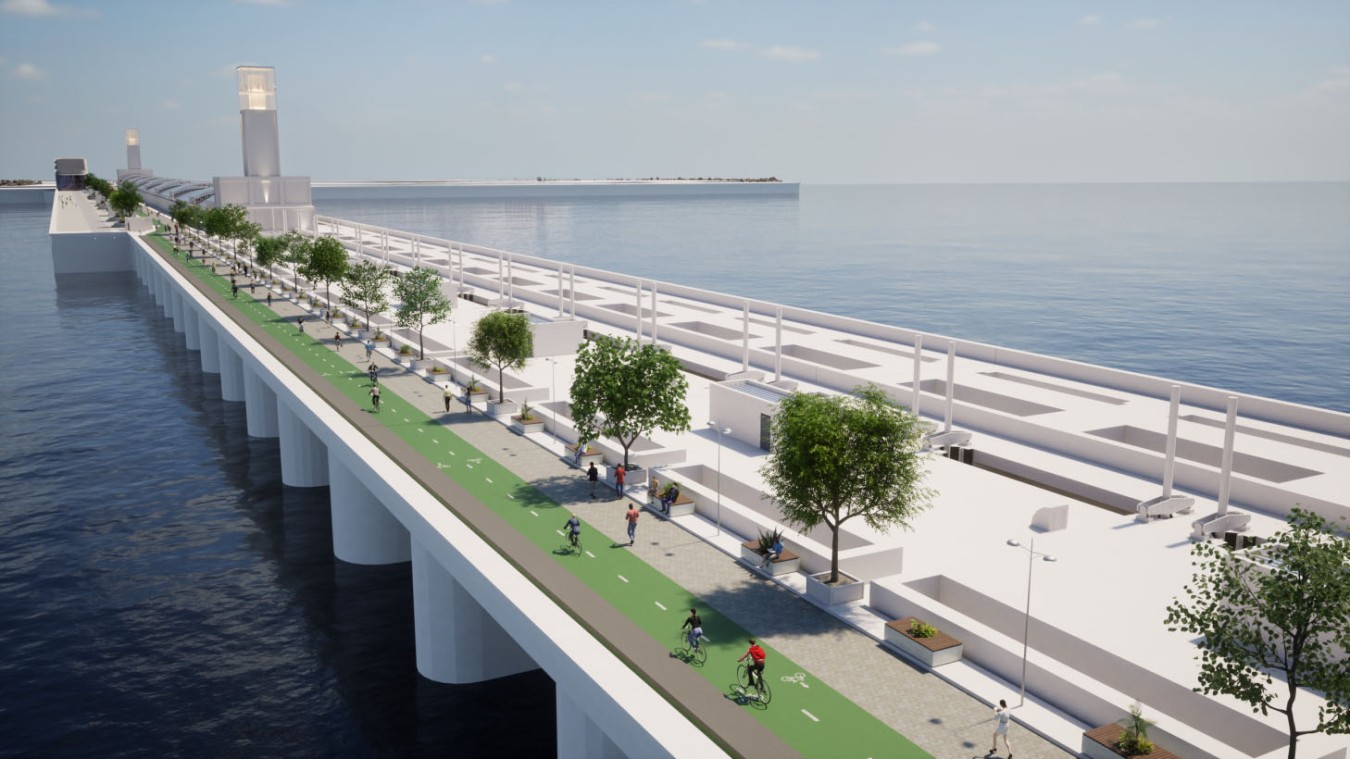
Project could generate up to 1 gigawatt of green energy over 120 years
Thousands of jobs created in construction and operation
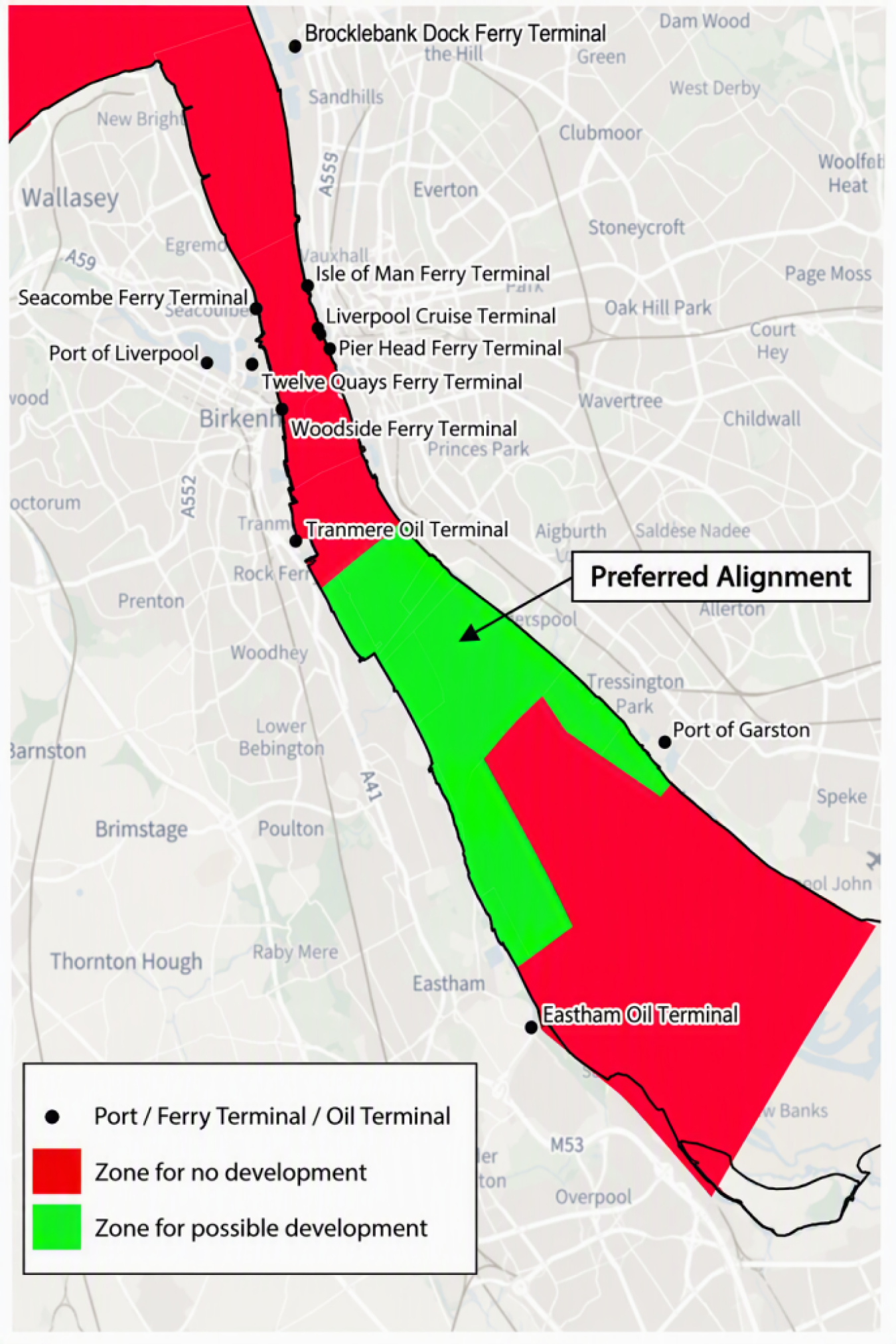
Bromborough area to Otterspool area identified as best place for barrage
Preferred funding model for world’s largest tidal power scheme also revealed
The area between Bromborough and Otterspool has today been revealed as the preferred development zone for the world’s largest tidal power scheme.
Liverpool City Region Combined Authority will be asked to approve a preferred alignment corridor that covers a 1.5-mile stretch of the River Mersey covering both the Liverpool and Wirral banks, at its November 6 meeting.
The decision will enable the project to progress to the next phase of engineering, environmental and commercial development work towards a future Development Consent Order (DCO) application.
The preferred alignment corridor was chosen following engagement with key stakeholders and a detailed technical appraisal of the options, which also recommended further work should focus on refining the barrage to align with navigation channels to the side of the barrage as well as lock-based options.
No construction work would take place until a DCO is granted and a Final Investment Decision is made.
Mayor Steve Rotheram said:
“For as long as I can remember, people have talked about harnessing the power of the River Mersey. Identifying where the barrage could be built is a major step forward for a project that has the potential to be genuinely transformational – not just for our region, but for the country.
“At a time when events around the world can send energy prices soaring, we need to make better use of the resources we have on our own doorstep. We should be generating more of our own energy, strengthening our energy security and creating good jobs here at home.
“The Mersey has one of the biggest tidal ranges in the country and we have the industrial expertise and the ambition to help do something genuinely world-leading. And with the potential to protect homes and businesses from rising sea levels too, this could be an investment in our region’s future that our children, grandchildren and generations beyond them could still be benefiting from a century from now.”
Plans are currently being prepared for a second public engagement in late 2027 or early 2028 that would give local people and communities an opportunity to have their say and shape plans for the scheme.
A first public engagement in 2024 attracted more than 3,000 responses with 84% backing the project and 92% supporting the need for more renewable energy to be produced in the Liverpool City Region.
At the same meeting, the Combined Authority will also be asked to adopt a Regulated Asset Base (RAB) model as the preferred option to fund the project, following the completion of a Finance Model Update.
A Regulated Asset Base (RAB) funding model is a way of paying for large infrastructure projects, such as nuclear power stations, water networks or major transport schemes.
Instead of waiting until a project is finished before the organisation developing the asset starts earning money, the RAB model allows it to start recovering some of its costs from customers while the project is being built. That reduces costs for investors and the public purse and offers stable, regulated returns over time.
The Mersey Tidal Power Project is planned to be the largest tidal range power plant in the world, generating up to 1 gigawatt of clean, green electricity for 120 years. It would create thousands of jobs initsconstructionand operationand position the Liverpool City Region as the UK’s epicentre for tidal manufacturing and associated supply chains.
The River Mersey has a tidal range – the difference between high and low tides – of up to 10 metres, the second highest in the UK, and a uniquely-shaped estuary, making it perfectly suited for the scheme, which would generate electricity based on the difference in water level either side of a barrage.
In January this year, the Combined Authority announced that following detailed analysis of updated Environment Agency flood maps, the project would become a dual infrastructure scheme offering flood protection from rising sea levels as well as clean energy.
A tidal barrage could play a crucial role in protecting homes, businesses, and vital infrastructure across the region.
Councillor Angela Ball, Cabinet Member for Energy and Environment, said:
“The Mersey Tidal Power Project is a once-in-a-generation opportunity to deliver clean, affordable energy while protecting our communities and the local environment from the impacts of climate change. It’s an iconic solution that will benefit our region for decades to come.”
The Mersey Tidal Power Project, classified as a Nationally Significant Infrastructure Project under the Planning Act 2008, is currently in Phase 4 of development, which includes environmental assessments, engineering design, and preparation for a Development Consent Order submission. While the Final Investment Decision is now expected in 2030, the Combined Authority continues to work with government and partners to accelerate progress.
With a projected operational life of 120 years, the Mersey Tidal Power Project will help protect against sea level rise of 0.8m to 1.2m by 2150, making it a long-term solution for both clean energy and climate resilience.