Rail industry launches level crossing safety campaign for 10-15-year-olds
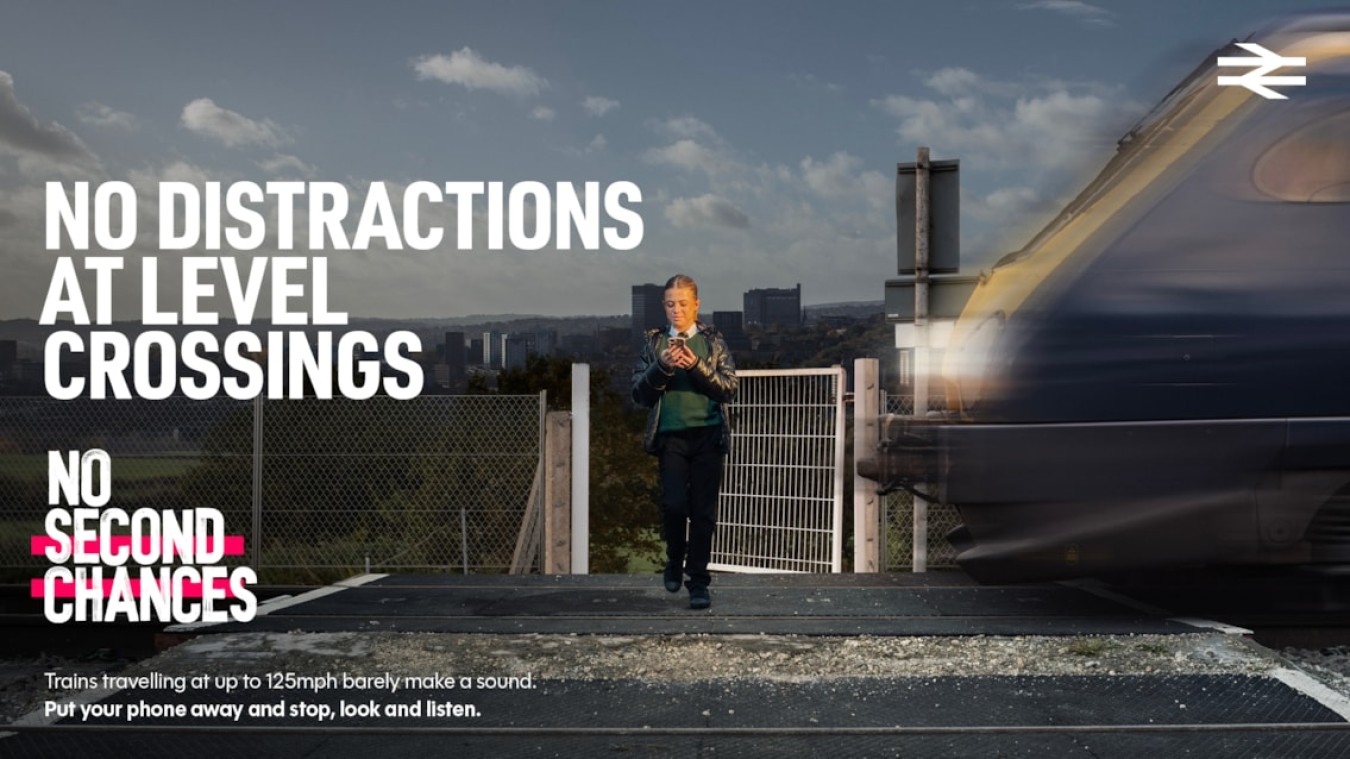
New rail industry campaign targets 10-15-year-olds on level crossing safety
Campaign follows two recent emergency level crossing closures, linked to young people's behaviour, and a general rise in incidents and near misses at crossings
Under the ‘No Second Chances’ campaign, this push will build on a previous level crossing safety campaign which saw a 69% reduction in near misses at target locations.
The rail industry has launched a new safety campaign aimed at children and young teenagers warning of the potentially fatal consequences of misusing or not paying full attention at level crossing, as incidents rise.
The latest edition of the 'No Second Chances' campaign comes after two level crossings have been subject to emergency closures in recent weeks following repeated and deliberate misuse:
Brickfields crossing in East London was closed afterrepeated dangerous behaviour by young people, and will remain shut while visits to local schools take place to help educate young people about the dangers of misuse or inattention at level crossings;
Coldblow crossing wassubject to an emergency closurefollowing repeated deliberate misuse, including from young people, and will have an audible warning system installed to help deter misuse.
Young people at Brickfields crossing in East London which has been subject to an emergency closure
More than 11,000 safety incidents have been recorded at or near level crossings since 2024, with children and young people accounting for over one in ten incidents (11%). Annual incidents have risen 44% since 2017/18, and figures for 2026/27 are already 9% higher than at the same point last year.
The rail industry's 'No Second Chances' safety campaign is therefore now turning its focus onto younger people to raise awareness of level crossing risks, challenge unsafe behaviour, and encourage people to stop, look, and listen every time they cross the railway.
The campaign specifically responds to two dangerous forms of behaviour:
Distraction – such as using phones, wearing headphones or talking to friends while crossing the railway
Deliberate misuse – including dangerous behaviour such as playing 'chicken', loitering on the crossing to take photos and videos, and intentionally circumventing barriers.
Earlier in 2026, the 'One Distraction' phase of the 'No Second Chances' campaign, targeting 16-34-year-olds, had a significant effect on people's behaviour, resulting in a 69% reduction in near misses at targeted level crossings. Now, this new campaign aims to go further by tackling a younger age group.
The rail industry is also encouraging parents and carers to talk to children about the risks and help them understand how to make safe decisions around the railway. From September 2026, rail safety education has been mandatory in the school curriculum in England, with pupils aged 3-16 being educated on rail safety, including dangerous social media trends and peer pressure encouraging bad behaviour on or near railways.
Daniel Fisk, Head of Level Crossings & Public Safety at Network Rail, said:"There are no second chances on the railway. And just because a level crossing is familiar, it doesn’t reduce the risk. One mistake or moment of distraction can have devastating consequences.
"For most young people, using a phone, chatting with friends or messing around is part of everyday life. But at a level crossing, one distraction or wrong decision could be fatal.
"That's why we’re reaching out directly to young people with this campaign. Our message is simple: level crossings must always be taken seriously, every time, and you should always expect to see a train. Before you cross, put phones away and remove headphones so that you can fully focus. Read the signs. Stop, look and listen, follow the warnings, and never take a risk around the railway."
Alongside its public-facing safety campaigns, Network Rail has undertaken a wide range of work to improve public safety at level crossings. This includes investing in bridges to completely remove the risk to the public, installing miniature stop light warning systems to automatically inform users when trains are approaching, rolling out new safety signs to enhance understanding about safe use of level crossings, and updating user guides in efforts to support continuous education and community engagement to reduce risk at level crossings.
There are nearly 6,000 level crossings across England, Wales and Scotland, with Network Rail having closed more than 1,400 crossings since 2009. For public safety, Network Rail will always look to close level crossing where possible and appropriate. This may be a through a straight closure, diversion, or through the introduction of new infrastructure.
BTP Chief Inspector Joe Gorman said:“Level crossings are safe when used correctly, but they can become incredibly dangerous in an instant if people ignore warnings, take risks or become distracted. We continue to see incidents involving young people at crossings, whether distracted by mobile phone use, peer pressure or deliberate misuse, but what may seem like harmless behaviour can have devastating consequences.
“That’s why campaigns like this are so important, so that young people are educated about the dangers of the railway and they can make safer decisions. We urge young people to respect the railways and keep safe. If you witness unsafe behaviour on or near the railway, report it to British Transport Police by texting 61016.”